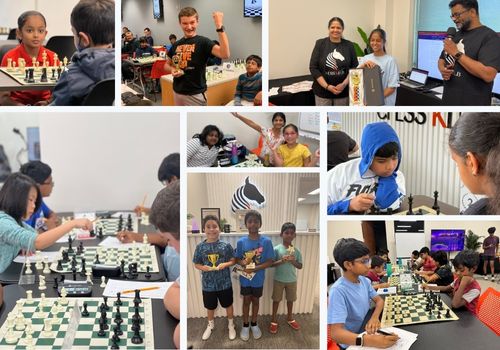
There’s always that one moment in a chess player’s journey when things shift from playing because it’s fun, to playing because it means something. For most students, that transition doesn’t happen at a big tournament. It happens quietly, after a tough loss, a missed tactic, or a game they should have won.
And that’s really where the journey begins.
If you’re starting out as a student in India, the pathway is actually quite structured if you know where to look. It typically begins with local district and state level tournaments. These are less about titles and more about exposure, learning to handle clocks, nerves, and different playing styles. From there, most serious players move into FIDE rated tournaments. Getting your initial rating is a milestone, it is your first step into the global chess ecosystem.
Once you are rated, consistency becomes everything.
The next layer involves playing national level tournaments like the National Challengers or age group championships. This is where players begin to understand the grind, multiple rounds, preparation between games, and the mental fatigue that comes with it. Around this stage, many aim for their first official title, Candidate Master or CM. Unlike norm based titles, CM is achieved by crossing a FIDE rating of 2200. It is a big deal, it signals that you are no longer just a promising student, but a serious competitive player.
From there, the ladder continues, FIDE Master or FM at 2300, International Master or IM at 2400 with norms, and ultimately Grandmaster or GM at 2500 with three norms. Each step demands not just stronger play, but deeper discipline, structured training, game analysis, and often working with experienced coaches.
But here is the part that is not talked about enough, the setbacks.
Every strong player you see today has gone through phases where results did not match effort. The difference is, they stayed. They showed up to tournaments even after bad performances. They reviewed their losses honestly. They kept playing.
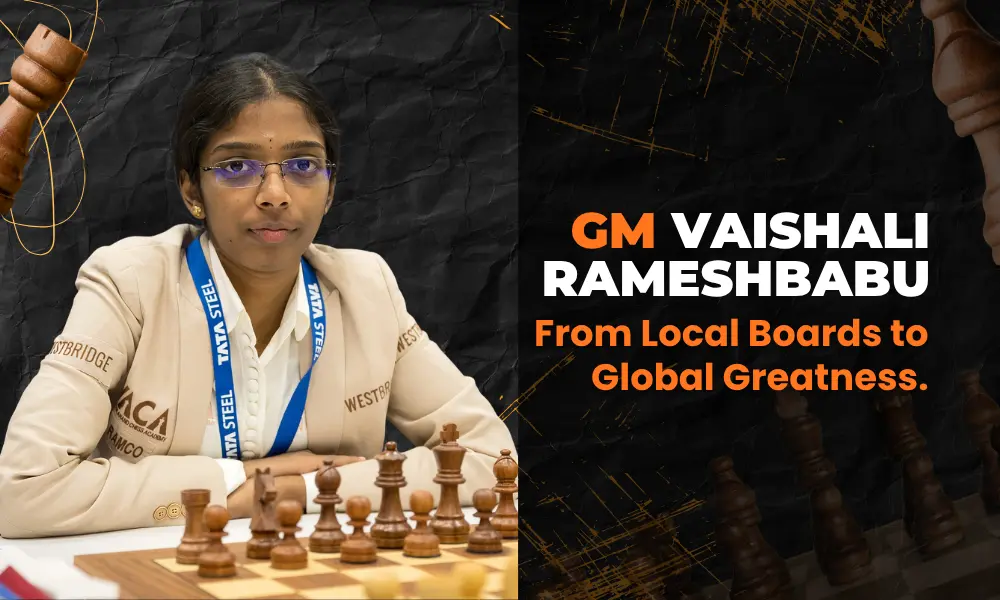
That is why stories like R Vaishali feel so significant right now. Her victory at the FIDE Women's Candidates Tournament, defeating Kateryna Lagno and earning a shot at the World Championship against Ju Wenjun, is not just a headline. It is a full circle moment for Indian chess. Because Vaishali did not appear out of nowhere.
She came through the same system, district events, national circuits, international opens. She trained rigorously, including time at the WestBridge Anand Chess Academy under the mentorship of Viswanathan Anand. Her journey reflects exactly what today’s students are navigating, a structured but demanding climb, where resilience matters as much as rating points.
♟️ Fast Facts: GM Vaishali Rameshbabu
- Hometown: Chennai, India.
- The Milestone: In 2023, she became India’s 3rd female Grandmaster (GM), joining the ranks of Koneru Humpy and Harika Dronavalli.
- A Historic Duo: She and her younger brother, Praggnanandhaa, are the world’s first-ever brother-s
- ister Grandmaster duo.
- Major Achievement: Winner of the 2023 FIDE Women's Grand Swiss, securing her spot in the prestigious Candidates Tournament.
- The Journey: She started chess at age 6—originally introduced to the game by her parents to reduce her time spent watching TV!
For any student wondering how far can I go, the answer is not fixed. Start with your first tournament. Get your rating. Aim for CM. Build from there. The path is long, yes, but it is visible. And if Vaishali’s win tells us anything, it is this, the distance between a young Indian student and the world stage is no longer as vast as it once seemed.
It is just a series of well-played moves.
Image Credit: Original photo by Frans Peeters via Wikimedia Commons, modified by CHESS KLUB under CC BY-SA 2.0.