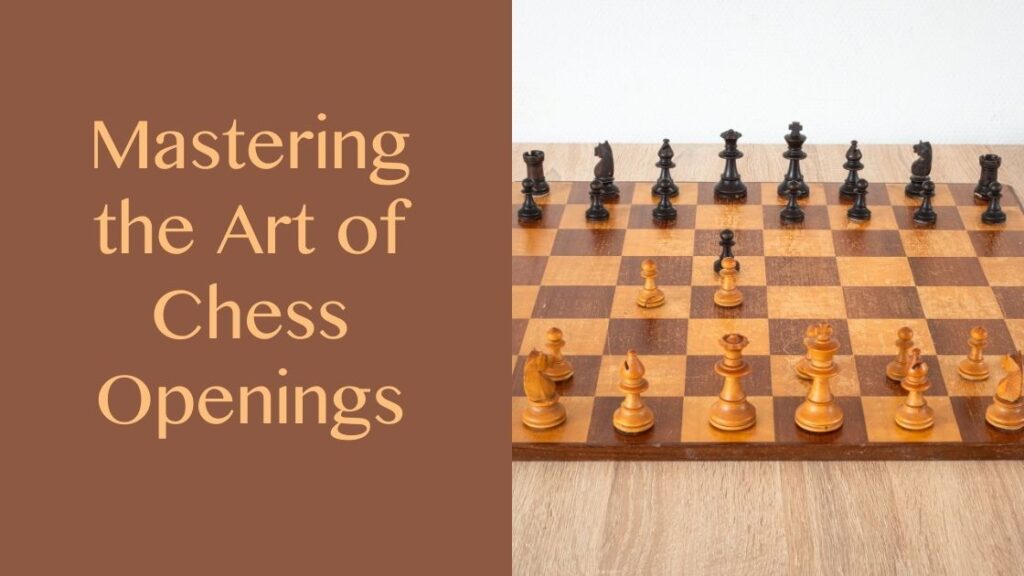
The King’s Pawn Game is any game beginning with the King Pawn:
- e4
This is the most popular starting move among the 20 starting moves that are possible. Advancing the King pawn two squares on the first move is highly useful because it occupies the center square, attacks the center square d5, and allows the development of White's King's bishop and Queen.
Introduction
The King Pawn games get classified into Open Games and Closed Games depending on Black’s response to ‘e4.’ The first move allows White to immediately take control of the center and opens pathways of development for the White pieces.
Thus it’s clear that 1. e4 is very much in line with the opening principles of the game. The King’s Pawn Opening has been the favorite move of many top chess players, and World Champion Bobby Fischer even called it “Best by test.”
1. Black occupies the center immediately by playing e5
For most of chess’s history, e4 followed by e5 was by far the most common way for a game to begin. e5 is good for all the same reasons as e4. This is the reply most often taught to beginners, and it’s popular all the way up to the World Championship level.
Black ensures a stronghold of the center and opens paths for his pieces to develop, just like White did with e4. White usually continues with 2. Nf3, which is a logical move to defend the center. Nc6 is typically the most obvious response to Nf3 to counter-defend the center.
2. Black responds with d5
This is called the Scandinavian Defense. To immediately strike White’s center pawn with the ‘d’ pawn comes with a certain appeal. Black intends to tell white’s e-pawn that it will not be allowed to remain on e4 for too long.
From Black’s side, the only disadvantage is that Black cannot recapture the d5 pawn without bringing out the Queen early into the game. After 2…Qxd5, white often just plays 3. Nc3, kicking the queen away while developing a piece. White immediately plays d4 once the Black Queen moves away from the d5 square.
3. Black occupies the center with c5
The Sicilian Defense is an aggressive, ambitious response to the King’s Pawn Opening that attracts players playing at different levels. Black seizes their share of central space in accordance with opening principles but creates a stark imbalance in the position from the very first move, making this a slightly asymmetrical opening.
This move may seem inferior as compared to the more central e5. Black gains space in the Sicilian, but the move 1…c5 doesn’t open as many paths for pieces to develop as e5 would. Only the queen is uncovered by this pawn move, and usually, the Queen doesn’t develop early. It is possible that white is likely to obtain a lead in development in the Sicilian Defense by playing d4 in the Opening to gather more of the center before Black catches up. Then black gets to exchange his c-pawn for white’s more-central d-pawn.
Black obtains the long-term advantage of having two central pawns compared to white’s one pawn on e4. Sometimes white will play an early f4 and build up slowly on the kingside, where white is assured of a space advantage.
Conclusion
Although these are the most common responses to White’s e4, there are many other possibilities where Black tries to fight for the center. No matter how Black responds, the King pawn opening for White is a great opportunity for White to control the center and have maximum development.