The Reti Opening is a strong hypermodern opening which includes a strong strategic line of play where White doesn’t take immediate control of the centre with pawns. This opening has been played by famous Grandmasters like Anatoly Karpov and Ulf Andersson in the past and by popular Grandmasters today like Levon Aronian, Magnus Carlsen, Peter Svidler, Hikaru Nakamura, Vladimir Kramnik and many more.
The Reti Opening is an unconventional opening where the game begins with the Knight, traditionally followed by White controlling the centre with the flank ‘c’ pawn. This is a hypermodern opening where White controls the centre with minor pieces and flank pawns instead of centre pawns like other conventional openings.
Definition
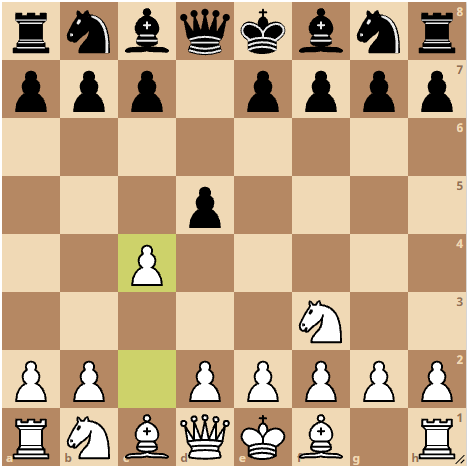
This is an opening played by White characterized by the game beginning with Nf3 with Black classically playing d5 as the first move. White responds to this by bringing the c pawn to c4 and follows this buy a possible fianchetto of the Kingside Bishop. This is a flexible opening where White allows the ‘e’ and the ‘d’ pawns to remain on their starting squares, and White does not commit to a specific pawn structure. Some believe that this opening resembles the English Opening due to the early use of the ‘c’ pawn.
Theory
Nf3 d5
c4
Nf3 is an excellent square for the White Knight, which allows development as well as the possibility to castle early. Further, Nf3 also prevents Black from playing e5 and occupying the centre. Such a structure allows White to wait for Black to make moves, depending upon which White plays; hence this opening is termed to be flexible and non-commital to a specific pawn structure.
History and Origin
This opening was named after the famous Czechoslovakian Richard Réti, who used this opening to defeat José Raúl Capablanca, who was the World Champion in 1924. The opening gained popularity in the 1920s when every opening that began with Nf3 or c4 was considered the Reti Opening. It was later over years that this opening was defined and gained structure.
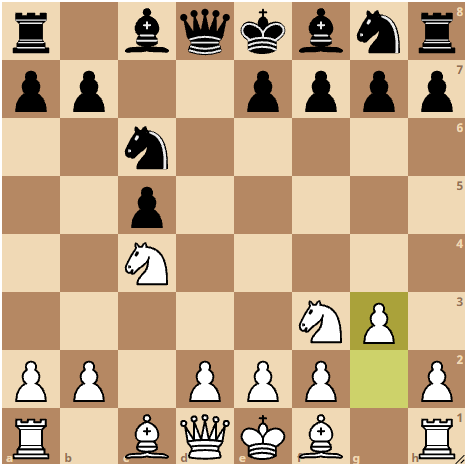
Reti Gambit Accepted
Here, Black plays dxc4 on the 2nd move, which White follows with e3 threatening the pawn on c4. Na3 is also an option if White does not wish to play e3. Black usually follows with c5, followed by Nxc4, Nc6 and White, then play g3, to fianchetto the kingside, White Bishop. To fianchetto, one of the White Bishops is a major tactical concept in the Reti Opening.
Advanced Variation
Here Black does not take the c4 pawn and instead pushes the pawn forward and plays d4. If White plays g3 here, the game is most likely to transpose into the Benoni Defence with reverse colours. However, going for this variation will give White a tempo and will force Black to play a rather passive game. The most desirable move for Black is c5, which White can avoid by playing b4 instead of g3. Black would respond to b4 by playing f6 followed by 4.e3 e5 5.c5 a5.
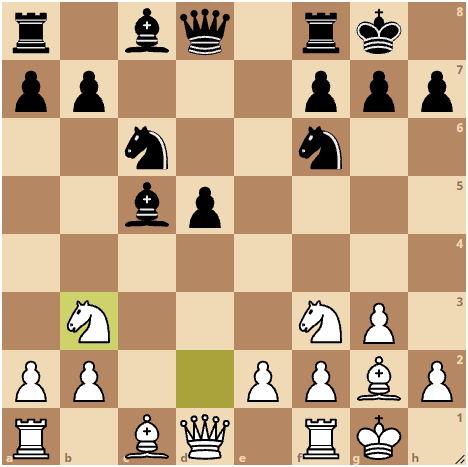
The Tarrasch Defence
- Nf3 Nf6
- c4 e6
- g3 d5
- Bg2 c5
- cxd5 exd5
- 0-0 Nc6
- d4 Be7
- dxc5 Bxc5
- Nbd2 0-0
- Nb3
Once Black moves the Bishop to e7, White can capture the pawn on c5 and gain a tempo. White has a slight edge here as White’s Bishop is fianchettoed on the g2 square controlling a long file.
Reti Opening – Queen’s Gambit Declined Structure
This line is the most common set-up for Black against the Reti Opening.
- Nf3 d5
- g3 Nf6
- Bg2 e6
- c4 Be7
- Qa4 Bd7
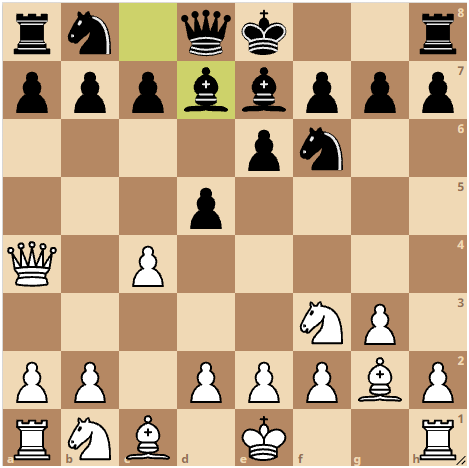
White plays g3 instead of c4 as this move leaves the opponent guessing whether this game is going to transition into the King’s Indian Attack and also prevents Black from playing a very sharp line.
If Black plays Slav Defense
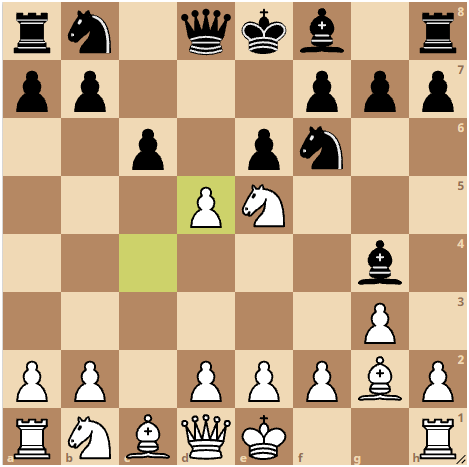
The Reti Opening is very effective against the Slav Defense, and Black tries to reach the Slav set up commonly when playing against the Reti Opening. Here White does not play d4 early in the game, and if Black tries to bring the Bishop out to f5 or g4, White can simply block this Bishop by playing d3.
- Nf3 d5
- g3 Nf6
- Bg2 c6
- c4 Bg4
- Ne5 e6
- cxd5
King’s Indian Defense
The King’s Indian Defense is an opening you are likely to encounter when playing the Reti Opening. An early b4 in the game is a great preparation for the King’s Indian Defense. Further, it would be good for White to transpose into d4 lines by playing:
- Nf3 Nf6
- c4 g6
- g3 d5
- Bg2 Bg7
- d4
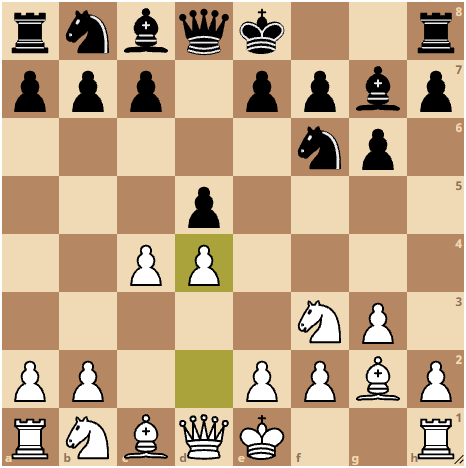
White now has a fianchettoed Bishop on g2, giving White a slight advantage in the Opening.
Traps
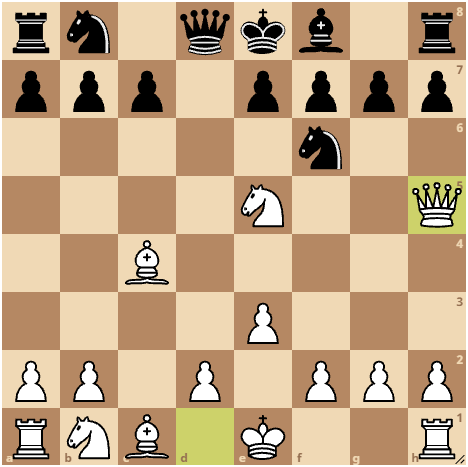
This is a trap seen in the mainline of the Reti Opening.
- Nf3 d5
- c4 dxc4
- e3 Nf6
- Bxc4 Bg4
- Ne5 Bh5
- Qxh5
Statistics
| Sr. No | Result: | Percentage: |
|---|---|---|
| 1 | White Wins | 43.24% |
| 2 | Draws | 34.23% |
| 3 | Black Wins | 22.53% |
Grandmaster Games
Grandmasters like Anatoly Karpov and Ulf Andersson have played this opening in the past, and Grandmasters like Levon Aronian, Magnus Carlsen, Peter Svidler, Hikaru Nakamura and Vladimir Kramnik have played this opening in their recent games. Some of the most famous games played are:
Learning Guide
Books to Refer
- Starting Out: The Réti – Book by Neil McDonald
- The Modernized Reti, Extended Second Edition: A Complete Guide – Book by Adrien Demuth
- Easy Guide to the Reti Opening – Book by Angus Dunnington
- The Dynamic Reti – Book by Nigel Davies
FAQ
Why play the Reti Opening?
It is a flexible opening where White does not commit to a specific pawn structure from the beginning and does not hurry to take control of the centre. Further, this opening offers a wide scope for a variety of transpositions.
Is the Reti Opening good for Beginners?
The opening does not require alot of theoretical knowledge and tactical abilities; hence it may be a good option for some Beginners willing to play something unconventional.